Mandela and South Africa
In a 2009 interview with GB, Louise Arbour, former UN Human Rights Commissioner and current President and CEO of the International Crisis Group, named Nelson Mandela her favourite historical leader.
Arbour is not alone.
Last month, South Africans and millions around the world celebrated Nelson Mandela International Day (Mandela Day). This was the first celebration of its kind since the UN General Assembly declared the 18th of July – Nelson Mandela’s birthday – an occasion to commemorate an icon who, through courage and personal sacrifice, not only helped to free South Africa from the chains of apartheid, but also inspired millions in the process and contributed so profoundly to world freedom.
UN Secretary-General Ban Ki-moon had the following to say on the occasion: “Nelson Mandela is a towering figure. [His] accomplishments came at great personal cost to himself and his family. His sacrifice not only served the people of his own nation, South Africa, but made the world a better place for all people, everywhere. Today, on the first Nelson Mandela International Day, we thank him for everything he has done for freedom, for justice and for democracy. He showed the way. He changed the world. We are profoundly grateful.”
Similar sentiments were echoed by world leaders, including President Barack Obama, the first Black American US head of state. Said Obama: “[w]e are grateful to continue to be blessed with his extraordinary vision, leadership, and spirit.” Martti Ahtisaari, former president of Finland and a Nobel Peace Prize winner (2008), shared the following words: “President Mandela has given 67 years of his life, now what we all could is to try to use 67 minutes of our lives, and change the world for the better.” “There is no one more deserving of this unprecedented international recognition,” added US Secretary of State, Hillary Clinton. It did not matter where one stood on the political map of the world. Aligned or non-aligned, praise poured in from all four corners.
The universal admiration for Mandela is understandable and well deserved. Here is a man whose ideals and principles – freedom and perseverance in the face of oppression – transcend borders, ethnic divisions and linguistic lines. A man of monumental achievements, his personal life story and moving declarations have resonated with people from all walks of life and in all countries, giving hope wherever oppression reigns and the dignity of mankind is given scant regard.
Mandela’s vision for his own country as one founded on equality, democracy, reconciliation and unity got its start in 1994, after years of hard-fought resistance against apartheid rule. Any visitor to South Africa today cannot help but be impressed with the fact that, in less than two decades, and notwithstanding its imperfections, the country has made significant socio-political progress. Many miles have already been travelled, leaving behind the malicious pages of the country’s chapter under apartheid rule.
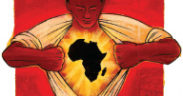
In the words of Mandela himself, “[i]n the same way that the liberation of South Africa from apartheid was an achievement of Africa, the reconstruction and development of our country is part of the rebirth of the continent.” Indeed, it is not an exaggeration to suggest that African states have all the provisions to transform themselves into fully developed countries, and to rise to prominence on the world stage in this new century provided they can leave behind the ill-effects of their colonial past and the growing pains of independence (see Tête à Tête with Oxford historian Margaret MacMillan in GB‘s Fall 2009 issue).
Of course, this is not to say that today’s South Africa is bereft of challenges. Post-apartheid South Africa has experienced a significant brain-drain that threatens to undermine its long-term prospects across the sectors. Also, the country still grapples with integration hurdles (see Kevin Bloom’s Query piece from the Spring/Summer 2010 issue of GB) and xenophobia against immigrants mainly from other African states who have sought refuge in the country in search of a more promising life. Although South Africa has the world’s 25th largest GDP, nearly a quarter of its population is unemployed. The ruling African National Congress (ANC) has come increasingly under criticism for its handling of the economy. The country also suffers from rampant crime, with alarmingly high rates of murder, rape and other forms of non-political violence.
Worse still, despite the post-apartheid rise of a proper black middle class, national income inequality remains staggeringly high, with white South Africans on average enjoying significantly higher incomes than blacks. White South Africans still comprise the majority of the skilled labour force, and hold a relative monopoly on the main pillars of South Africa’s formal economy. The Aids epidemic – now estimated to affect some six million South Africans out of a population of approximately 50 million; a rate higher than that of any other country in the world – also has an adverse impact on not only the public purse, but also on the country’s productive output.
South Africa, like any other state, has its challenges, no doubt, but credit ought to be given where it is due. It is irrefutable that the country has made great strides forward since 1994. Despite the blemishes of its apartheid past, which still exist to varying degrees beneath the surface, Mandela’s South Africa has transformed the ‘skunk of the world’ into a new nation founded on reconciliation, tolerance and national unity.
The new South Africa that notable figures like Nelson Mandela, Archbishop Desmond Tutu, Albert John Lutuli, Stephen Bantu Biko and other anti-apartheid activists have built through their courage and sacrifice is a gift to humanity. We should all be invested in the South African story, and remain vigilant that the hope that it offers to Africa and other parts of the world does not fail. As failure will not only mean regression for the country, but its reverberations will spoil the aspirations of all those who look to South Africa of today as a modern historical example of how the sheer power of the people can transform and propel a society forward no matter the resistance or the repressive measures wielded by those in power.
Arrested for his anti-apartheid activities on a tip-off from the CIA, a young Nelson Mandela articulated the following during the Rivonia trial in 1964 before the Pretoria Supreme Court: “I have cherished the ideal of a democratic and free society in which all persons will live together in harmony, and with equal opportunities. It is an ideal which I hope to live for, and to see realized. But if need be, it is an ideal for which I am prepared to die.”
Humanity is richer because of visionaries like Nelson Mandela and the nation he worked to craft in his own image. That nation, South Africa, is a complex work in progress. May he and the fruits of his labour continue to inspire us the world over, and serve both as a beacon of hope wherever lack of liberty suffocates the human spirit, and as a caution to the world’s oppressors that only the people are sovereign, and equality, freedom and respect for human rights are indivisible aspirations of all people, irrespective of sex, race, ethnicity, religion or creed.
Let everyday be Mandela Day.
The following photos provide a snapshot of the struggle against apartheid in South Africa through the presentation of some of the iconic places, people and doctrines that contributed to the turning of the page in the country’s tumultuous history.

Sam Sasan Shoamanesh is Co-Founder and Managing Editor of Global Brief. The views expressed in this commentary have been provided in the author’s personal capacity.